
Roses bring colour, fragrance, and a sense of occasion to a garden, balcony, entrance, or shop display. They are often treated as difficult plants, but most rose problems come from a small number of issues: not enough sunlight, poor drainage, wet foliage, overcrowding, or pruning at the wrong time.
With the right rose variety and a simple care routine, beginners can grow healthy plants and enjoy new buds throughout the growing season. This guide explains how to choose a rose, prepare the pot or garden bed, provide light and water, feed the plant, prune it, manage common problems, and select roses for different spaces.
Give roses at least several hours of bright sunlight, plant them in fertile well-draining soil, water deeply at the base when the top layer begins to dry, feed during active growth, and prune with clean tools to encourage airflow and new flowering stems.
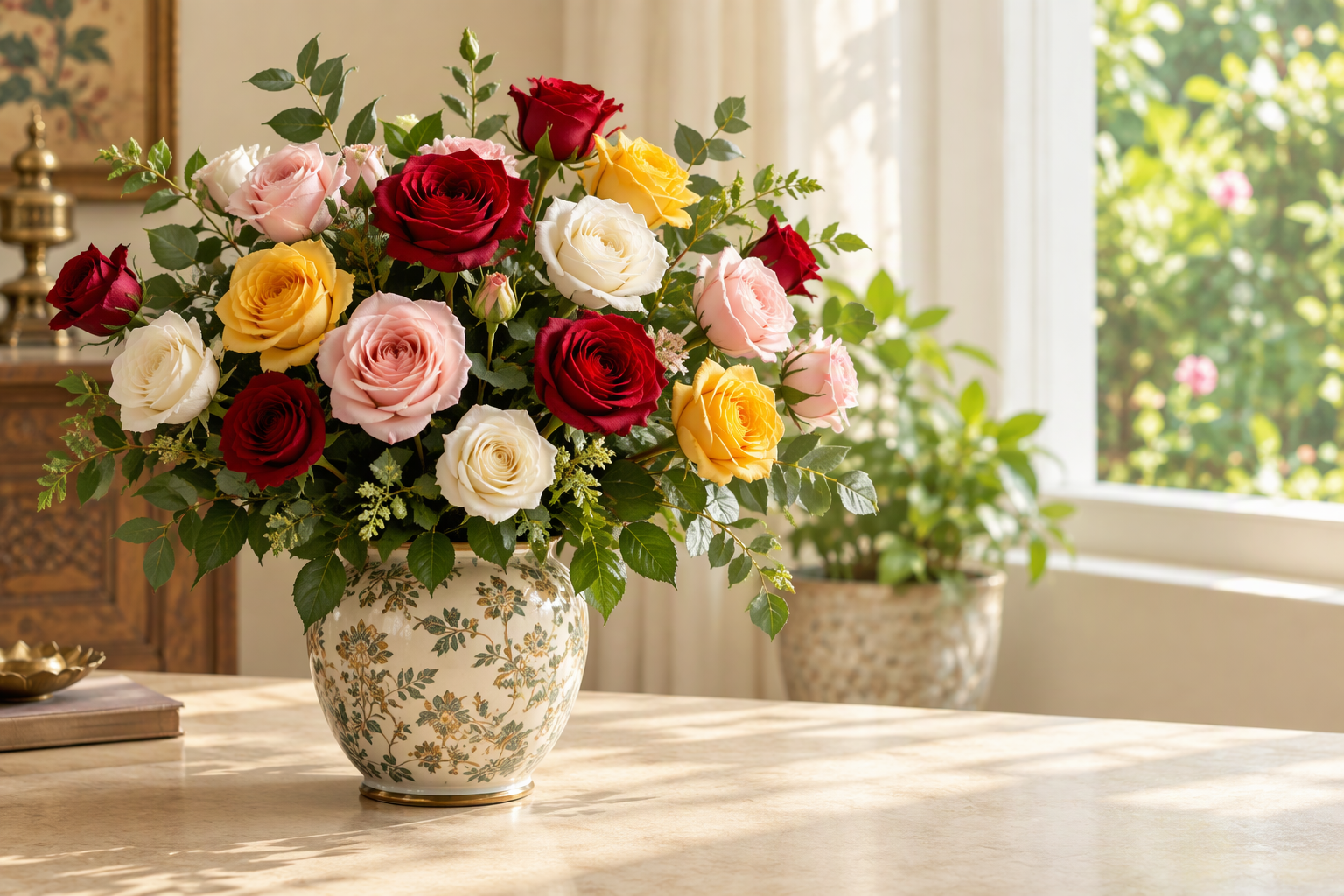
Why Grow Roses?
Roses are versatile flowering plants. They can be grown in garden beds, large containers, balconies, terraces, entrance areas, and commercial displays. Different varieties offer different heights, fragrances, colours, and flowering habits.
- Colour: Roses are available in red, pink, white, yellow, orange, peach, lavender, and blended shades.
- Fragrance: Many traditional and shrub roses offer a noticeable scent, although fragrance varies by cultivar.
- Design flexibility: Miniature roses suit containers, while climbers can cover trellises and arches.
- Pollinator value: Open flowers can provide access to pollen for visiting insects, especially when some blooms are allowed to open fully.
Popular Rose Types for Home Gardens

Hybrid tea roses
Hybrid tea roses are known for large, classic blooms often carried on long stems. They can be excellent for cutting and display, but they usually benefit from strong light, feeding, airflow, and regular attention.
Floribunda roses
Floribundas produce clusters of flowers and can create a fuller, more continuously colourful display. They are useful when the goal is abundant garden colour rather than one large bloom per stem.
Miniature roses
Miniature roses have smaller leaves and flowers and are suitable for containers, balconies, windowside displays, and compact gardens. They still need bright light and good drainage.
Shrub roses
Shrub roses often grow with a broader, more natural shape. They can work well in borders, larger pots, and informal garden settings.
Climbing roses
Climbing roses need support such as a trellis, arch, or sturdy wall structure. Tie long stems gently and allow space around the plant for airflow.
Choose the rose for your space first. A miniature or compact shrub is usually easier on a balcony, while a climber needs vertical support and room to spread.
What Roses Need to Grow Well
- A bright, sunny position
- Fertile soil that drains freely
- Good air movement around the leaves
- Consistent deep watering without waterlogging
- Regular feeding during active growth
- Pruning with clean, sharp tools
- Inspection for pests and disease
How to Plant a Rose
Choose a healthy plant
Look for firm green growth, healthy leaves, and a stable root system. Avoid plants with widespread black spots, soft stems, severe wilting, or visible pest colonies.
Select the right location
Choose a place with strong natural light and enough room around the plant. Avoid positioning roses where leaves remain wet for long periods or where the plant is pressed against a wall.
Prepare the soil or pot
Use fertile, well-draining soil. For containers, choose a pot with drainage holes and enough depth for the root system. Do not place a small rose in an oversized pot that stays wet for too long.
Plant at the correct depth
Set the root ball at a similar depth to its original container. Firm the soil gently around the roots without compacting it heavily.
Water the planting area
Water thoroughly at the base after planting so the soil settles around the roots. Keep the foliage as dry as possible.
Add a light mulch layer
A thin layer of organic mulch can help moderate moisture and temperature. Keep mulch away from direct contact with the stem.
Light Requirements
Most roses flower best with several hours of direct or very bright sunlight each day. Morning sun is especially useful because it helps dry dew and surface moisture from leaves.
When a rose receives too little light, it may grow long and weak, produce fewer flowers, or become more vulnerable to disease. Increase light gradually if the plant has been kept in shade, because a sudden change can stress leaves.
How to Water Roses
Water roses deeply at the soil line rather than spraying the leaves. A deep watering encourages roots to grow downward, while frequent shallow watering can leave the upper roots dependent on regular moisture.
- Check the top layer of soil before watering.
- Water slowly around the root zone.
- Allow excess water to drain away.
- Do not leave a container standing in water.
- Water earlier in the day when possible.
Container roses often dry faster than garden roses, especially in hot weather. Humid weather, heavy rain, and cooler conditions can slow drying, so adjust the routine rather than following a fixed calendar.
| Sign | Possible cause | What to check |
|---|---|---|
| Leaves wilt in dry soil | Plant needs water | Water deeply and check drainage |
| Yellow leaves with wet soil | Overwatering or poor drainage | Inspect roots and improve drainage |
| Black spots on leaves | Fungal disease or prolonged leaf wetness | Improve airflow and avoid overhead watering |
| Few flowers | Low light, weak feeding, or incorrect pruning | Review sun, nutrition, and pruning timing |
Feeding Roses
Roses use nutrients to produce new leaves, stems, roots, and flowers. Use a fertiliser labelled for flowering plants or roses and follow the product instructions carefully.
Feed during active growth when the plant is producing new leaves or buds. Avoid applying strong fertiliser to very dry soil or a recently stressed plant. Water first if the soil is completely dry, then apply nutrients according to the label.
Pruning Roses
Pruning helps shape the plant, remove damaged growth, improve airflow, and encourage productive new stems. The exact method depends on the rose type and local growing season.
- Use clean, sharp secateurs.
- Remove dead, weak, or damaged stems first.
- Cut just above a healthy outward-facing bud when shaping.
- Remove crossing stems that rub against one another.
- Do not remove healthy growth unnecessarily.
- Disinfect tools between diseased plants.
Deadheading spent flowers
Removing faded flowers can keep the plant looking tidy and may encourage further flowering in repeat-blooming roses. Cut back to a strong leaf joint rather than leaving a long bare stem.
Common Rose Problems
Aphids on new growth
Aphids often gather around soft new stems and flower buds. Inspect the plant regularly and use a suitable plant-safe treatment according to its label. Strong water pressure can also dislodge small colonies, but avoid damaging tender growth.
Black spots on leaves
Dark spots and early leaf drop can be linked to fungal disease and wet foliage. Improve airflow, remove heavily affected leaves, water at the soil line, and avoid crowding.
Powdery white growth
White powdery patches may indicate powdery mildew. Stress, poor airflow, and crowded growth can contribute. Improve ventilation and use a treatment appropriate for roses and your local conditions.
Bud failure or damaged petals
Flower buds may be affected by pests, rain, heat, nutrition, or inconsistent watering. Check the buds closely and review the plant’s light and watering routine.
Root or stem rot
Soft stems, foul-smelling soil, and persistent wetness suggest a drainage problem. Remove damaged material, improve drainage, and avoid watering again until the planting mix has dried appropriately.
Propagating Roses
Rose propagation methods vary by cultivar. Some roses are grown from cuttings, while commercial plants are often grafted onto suitable rootstock. If you try cuttings at home, use healthy non-flowering stems, clean tools, and a light, moist but not waterlogged rooting medium.
Propagation results are not guaranteed, and new plants may not have exactly the same performance as the parent plant. For reliable variety-specific results, use healthy nursery stock from a trusted source.

Rose Care in Containers
Container roses need more frequent observation because pots dry and heat faster than garden soil. Choose a container with drainage, place it where the plant receives good light, and rotate it periodically for balanced growth.
- Check the soil more often in hot weather.
- Lift or inspect the pot to confirm water is draining.
- Repot when roots become crowded or soil structure breaks down.
- Use a stable pot for tall or climbing varieties.
- Move sensitive plants away from extreme heat or cold.
Rose Styling Ideas for Home and Shop
- Balcony: Use compact roses in matching containers and group them near a bright railing.
- Entrance: Place a flowering shrub rose in a stable statement pot.
- Shop display: Use miniature roses or fresh cut blooms to add colour near a counter or window.
- Climbing feature: Train a climber along a trellis or arch with enough space for airflow.
- Gift arrangement: Pair a rose plant with a decorative pot and a simple care card.
Rose Care Checklist
- Choose a variety suited to the available space.
- Provide strong light and good air movement.
- Use well-draining soil and a pot with drainage holes.
- Water deeply at the base when the soil needs it.
- Feed during active growth according to the label.
- Remove dead flowers and damaged growth.
- Inspect leaves, stems, and buds for pests.
- Adjust care for season, weather, pot size, and rose type.
Frequently Asked Questions
How much sunlight do roses need?
Most roses flower best with several hours of bright sunlight. Exact needs vary by variety and local conditions.
How often should I water a rose plant?
Water when the soil begins to dry at the surface and adjust for pot size, weather, and season. Container roses may need checking more often than garden roses.
Can roses grow in pots?
Yes. Choose a compact or miniature variety, a stable container with drainage, and a well-draining growing mix.
Why are my rose leaves turning yellow?
Possible causes include overwatering, poor drainage, nutrient imbalance, pests, or natural ageing. Check the soil and the overall plant before changing the routine.
Should I water rose leaves?
Water the soil rather than the leaves when possible. Keeping foliage dry can help reduce conditions that favour some fungal diseases.
Final Thoughts
Roses become much easier when their basic needs are understood. Give the plant enough light, choose a suitable variety, use soil that drains freely, water at the root zone, feed during active growth, and prune with clean tools.
At Phulbazar, we believe flowering plants can change the feeling of a home, balcony, shop, or garden. Explore more plant-care ideas and contact us for help choosing greenery and flowers for your space.

Debjani is the founder of Phulbazar, an online nursery and plant-decoration business. She shares practical ideas for bringing flowers and greenery into homes, shops, and outdoor spaces.